

The Cadastre has significantly accelerated the process of formalizing ownership during 2026, marking a positive balance in both legalizations and the digitalization of documentation and progress in property registration.
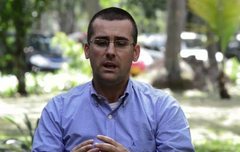
In a video message, the General Director of the State Cadastre Agency, Lorena Goxhobelli, announced that in the first 9 months of this year alone, over 28 thousand legalization decisions have been issued, a figure that exceeds the entire volume of 2025.
According to Goxhobelli, this result is the product of intensive work to conclude pending processes and make property administration faster and more efficient.
Another important direction has been the digital transformation of the Cadastre. During 2026, 4.2 million property cards were digitized, while a national project for the digitization and georeferencing of 38 thousand physical maps and tablets has also been launched. In parallel, the Initial Registration has reached 95.3% of the country's territory, fulfilling the objective set within the framework of the European integration process.
The focus has also been on the formalization of agricultural property. For the first time, the process of transferring ownership of agricultural land has been extended to 59 villages, with the objective of handling around 1,000 requests.
But for the head of the Cadastre, beyond indicators and figures, the most important change is related to the way the institution is approaching citizens.
The Cadastre has launched a new “door-to-door” approach, especially for homes that do not yet have ownership documentation. The institution’s teams are currently working in the villages of the Himara Municipality, while this approach is expected to be extended to other communities, starting with rural areas where ownership issues have remained unresolved for years.
The goal is for citizens to be informed, oriented, and have the opportunity to closely address their property issues, without having to deal with an administration that is distant from their needs.
Goxhobelli emphasized that the results achieved so far represent only part of the road that remains to be traveled.
"The challenge is great, but our responsibility is also great," she says, setting as her objective the completion of pending processes, guaranteeing legal ownership for citizens, and building a faster, more transparent and closer to the people Cadastre.
"No property without a document and no citizen without an answer" remains the clear objective of the Cadastre's ongoing work.