The territory of the "Gjergj Kastrioti" high school in Durrës continues to remain deserted.
The archaeological expedition that discovered a Roman-era villa with mosaics, baths, and frescoes did not operate again this summer, with the hope that the entire surface would be preserved for excavations.
But recently, the Municipality of Durrës has approved the project of the “Gjergj Kastrioti” school and is getting ready to contract the works. The project was designed by the Spanish architecture studio, Toni Girones, and foresees the coexistence of the future school with the archaeological discovery.
"The "Gjergj Kastrioti" school project has been submitted to the Municipality of Durres. The funds foreseen for implementation have been approved in the Municipality's budget, and we are in the procurement procedure phase for the implementation of this project," said the Municipality of Durres in response to a request for information.
The school's foundation will be located in the southern part of the square and will occupy about 25 percent of the total area.
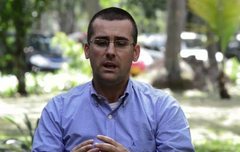
Architect Indrit Hamiti, whose studio is providing local support for the project, told BIRN that they now have a complete picture of what that space represents.
"Meanwhile, contacts with archaeologists and cultural heritage experts continue," said Hamiti, adding that in addition to the villa part, the other part that has archaeological potential would remain untouched.
According to Hamiti, the foreign architect has found a balanced solution, placing the school in the middle of the square, while the ground floor atrium with archaeological elements will occupy the main place.
The "Gjergj Kastrioti" school was severely damaged during the earthquake of November 26, 2019. For the seventh consecutive year, it has transferred students and teachers to two other schools.
Archaeologists from Durrës proposed a year ago that an alternative museum be established on the area freed from the previous discovery, while some others consider the UAMD rectorate building on Currilave Street as an opportunity to locate the future school.
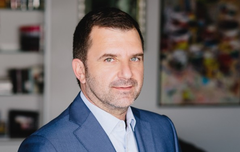
Professor Luan Përzhita, leader of the expedition, is concerned about the future of archaeological discovery.
“It will be problematic if the rains start,” said Përzhita.
"Hopefully there will be no damage, but that will be understood when we reopen the long-closed villa," he added.
He emphasized that he was not yet familiar with the specifications in the tender regarding the field of archaeology.
The school will have two entrances, one of which will serve tourists. It will connect the Archaeological Museum of Durrës with the latest discovery near the school, becoming a new archaeological itinerary for the coastal city.
Architect Indrit Hamiti estimates that the former paths need to be revitalized and can best serve the movement of tourists, also in the direction of the amphitheater and the church of Saint George in Kodër-Vilë.
The architect then talks about the time it will take to develop this complex.
"The archaeological excavation and its museumization will require a longer time. In my opinion, the school will have a faster construction process, without forgetting that this way we recover an asset...," Hamiti concluded. /Taken from Reporter.al