Wesley Clark: I feel like family among Albanians! Your courage brought change in 1999
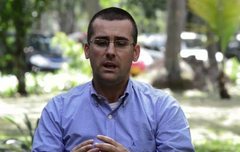
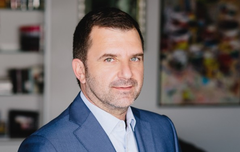
Former NATO general Wesley Clark spoke about his connection to Albanians, the courage of the resistance in Kosovo, and the experiences in Rwanda and Bosnia that influenced his determination to prevent the recurrence of atrocities, during a gala evening organized in the US by the Council on Albanian-American Relations. At the event, which was also attended by Prime Minister Edi Rama, Clark was honored with an award.
In his speech, he said that the award had a meaning that went beyond the ceremony: the feeling of being part of the Albanian community.
"I just want to tell you how honored I am to receive this award, but it's more than that: it's being part of your community. Every time I travel, everywhere I go, there's always someone from Albania. I feel like part of the family," Clark said.
He said that Albanians greet him in restaurants and airports in Europe and the United States, reminding him of Kosovo and often insisting on giving him a treat. In one case, he said, a man greeted him with the call “KLA,” while in another, a waiter brought him dessert with a greeting for Kosovo.
Clark also mentioned a dinner at Café Milano, where a person from Kosovo had approached him and insisted that he not pay.
"There was someone from Kosovo there to greet us and tell us: 'No, no, you can't pay for dinner. You can't pay for dinner,'" he confessed, adding with humor that they later left the waitress a good tip.
For Clark, these meetings are also evidence of the importance that the events of 1999 continue to have for Albanians.
"I know, because you have told me how much those events of 1999 meant to you. They will mean a lot to me too," he said.
Turning to NATO's intervention, Clark recounted a conversation with a Kosovo ambassador, whom he referred to as Flora, about organizing a memorial dinner on March 24. He had asked her why the date of the start of the bombings had been chosen and not the date of their end in June.
"She said, 'Because when I heard the sound of NATO planes, I knew we were going to be saved,'" Clark recalled.
The former general then focused on the courage and determination of Albanians themselves. He mentioned Adem Jashari and the first people to fight against Serbian domination in Kosovo, emphasizing that they paid a price for the freedom that many people in the West took for granted.
"History begins with courage. It begins with your courage and determination, with faith in your civilization, your language, your culture, your families," he said.
Clark attributed the changes of that period to the dedication of the people who resisted and urged those present to preserve the memory of the unity that made that change possible.
"It was your courage, your dedication that made all these events of 1999 happen. Not mine, yours," he said.
Clark devoted part of his speech to the international climate after the end of the Cold War. He recalled the uncertainty his generation had grown up with, the fear of nuclear conflict, and the sudden change brought about by the fall of the Berlin Wall. According to him, the years that followed were associated in the West with the belief that democracy, human rights, and individual freedoms had triumphed.
It was during that period, Clark said, that the courage of the people in the Balkans spurred change and found international support. He recalled the engagement of peacekeepers in Croatia and Bosnia, as well as the diplomatic efforts of 1995, when he was involved in negotiations together with Richard Holbrooke.
Clark indicated that during the talks they had also raised the issue of Kosovo with Slobodan Milosevic, but the latter had refused to discuss it.
"We talked to Milosevic about Kosovo. He said: 'No, it's mine. I won't talk about it,'" he confessed.
In the concluding part of the material, Clark spoke about the impact that the massacres in Rwanda and the evidence of the atrocities in Bosnia had on him. He said that, while serving in the Pentagon, he had drawn up a plan for intervention in Rwanda, but, according to him, the proposal was stopped by his superiors and did not reach President Bill Clinton.
“I lived with the guilt of that,” Clark said, linking that experience to the resolve he later felt in the face of violence in the Balkans.
He also recalled being shocked by the evidence of torture of civilians in Bosnia, including children. Clark said these experiences had led him to make a personal commitment: to act whenever he had the opportunity to stop such atrocities.
"I told myself: Never, never, never will I let something like this happen, if I have a chance to stop it," he said.