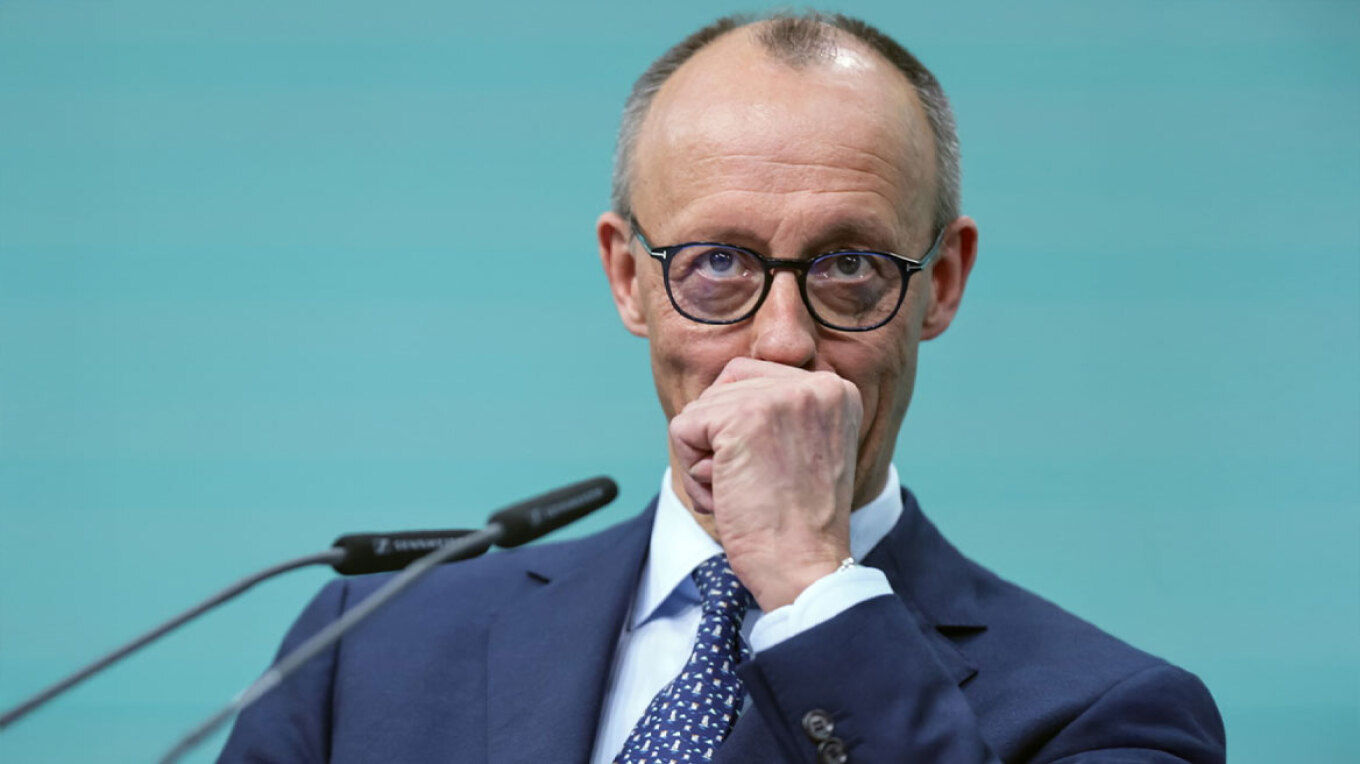
The chancellor's hold on power has looked increasingly tenuous since a shock regional election result earlier this month, in which the far-right Alternative for Germany (AfD) party defeated his Christian Democratic Union (CDU) party in Saxony-Anhalt.
With two more states going to the polls on Sunday, where the AfD is expected to do well, Merz canceled a plan to speak at the UN general assembly in New York next week because "his presence is mandatory in Berlin," a government official said on condition of anonymity.
The announcement sparked fresh speculation that the unpopular chancellor might be preparing his departure or wanted to stay and fight off a potential coup. With Merz on the verge of resigning after just 16 months in office, eight state premiers from the CDU issued a surprise joint statement in his support.
Citing the threat posed by nativist parties across Europe, they wrote: “Now more than ever, Germany’s political landscape needs stability,” referring to elections in Poland, Italy, Spain, Greece and France next year, in which the political establishment faces a challenge from the far right. “The way to restore public trust in the Christian Democrats lies in listening and taking political action, not in personnel debates.”
They added that Germany needed "credibility and decisive action" and, as state leaders, "we want and will do our part to achieve this together with the Chancellor."
The signatories included leaders who have been mentioned as potential successors to Merz, such as Hendrik Wüst of North Rhine-Westphalia. Markus Söder, the Bavarian premier and an ambitious conservative populist, has also said he is supporting Merz.
It remains to be seen how long the show of solidarity with Merz will last, with much depending on the outcome of the weekend's elections. Polls show voters are likely to punish the CDU again in the states of Berlin and Mecklenburg-Western Pomerania on the Baltic coast, amid widespread dissatisfaction with Merz's federal coalition government with the Social Democrats.
Merz, who is also chairman of the CDU, will call a meeting of its leadership on Sunday evening to coordinate a response as the results come in, in what senior party members called a preliminary "show of unity" behind the chancellor.
The anti-immigration, pro-Kremlin AfD's landslide victory in Saxony-Anhalt sent shockwaves through Europe's largest economy and beyond, although the party fell short of the absolute majority needed to govern the state alone.
It is seeking enough support from lawmakers from other parties in the state parliament to make its lead candidate, Ulrich Siegmund, the first regional far-right leader in Germany since the Nazi period.